
Boarding School Trauma, Safeguarding Failures & Emotional Survival — A Paediatrician’s Perspective | AEM #91 Dr William Verling
Boarding School Trauma Explained by a Paediatrician | Safeguarding, Shame & Survival
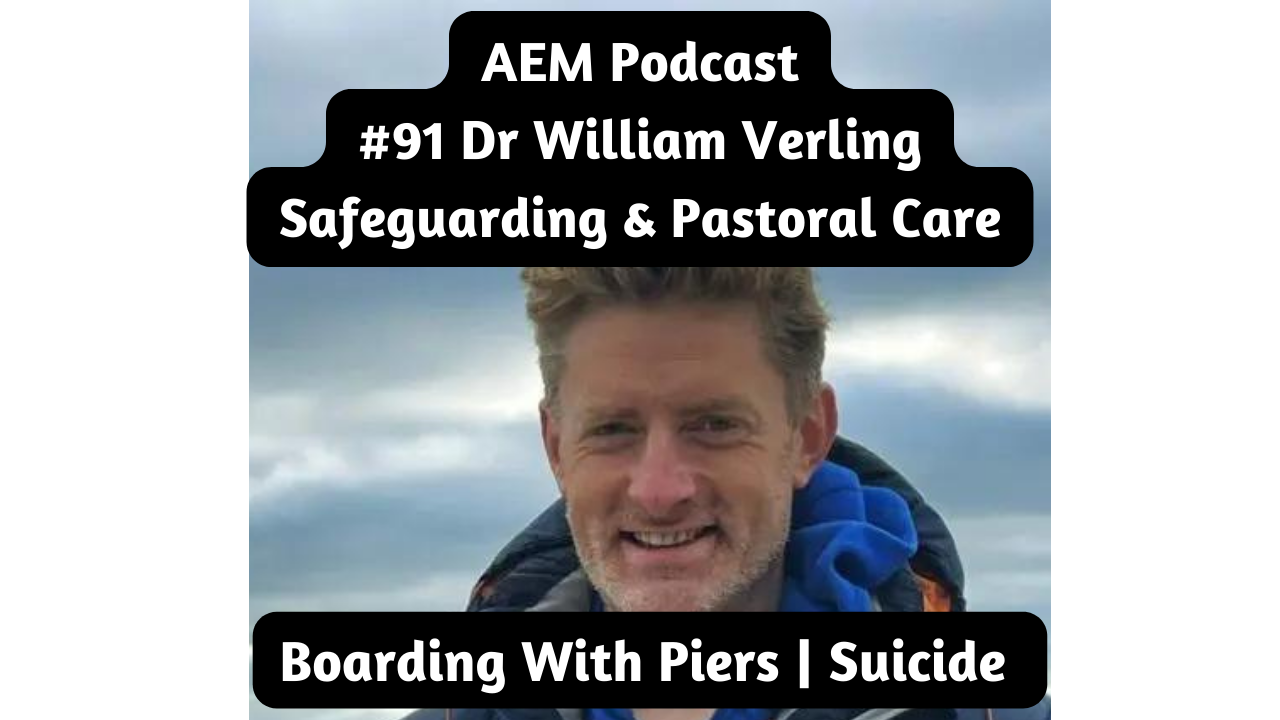
AEM Podcast #91 with Dr William Verling
Some conversations take years to be possible.
This was one of them.
In Episode #91 of An Evolving Man, I sat down with Dr William Verling — consultant paediatrician, safeguarding lead, and someone I lived alongside at boarding school for seven years — to speak honestly about what happens when children are sent away too young, without protection, and without adequate care.
This is not a conversation about nostalgia.
It’s about development, trauma, survival strategies, and the long shadow they can cast into adult life.
“We were just children”
William begins with something deceptively simple — and deeply unsettling in hindsight.
We arrived at boarding school at 10–11 years old.
Children who:
- couldn’t fasten their own clothes
- had never slept away from home
- were still neurologically dependent on caregivers for regulation and safety
And yet, we were placed into:
- 30-bed dormitories
- cold, austere environments
- rigid hierarchies
- total separation from parents
- almost no maternal or feminine presence
From a paediatric and developmental perspective, William names this plainly:
This was an environment fundamentally misaligned with what young children need to feel safe.
Pastoral care vs safeguarding — and why the difference matters
One of the most important distinctions William makes is between:
- Safeguarding – preventing abuse and harm
- Pastoral care – emotional containment, attunement, and support
At our school, both were profoundly lacking.
Despite the institution’s charitable aims, there was:
- no meaningful emotional containment
- no safe adult to disclose to
- no privacy
- no consistent warmth or protection
Children with prior trauma were placed into an environment that amplified rather than healed it.
William is clear: without wrap-around pastoral care, this was always going to fail.
Hunger, cold, fear — and living in constant vigilance
Listening to William describe daily life brought back visceral memories:
- never knowing if there would be enough food
- living in physical cold for months
- being watched while bathing
- no doors on toilets or showers
- nowhere to retreat, regulate, or feel safe
From a developmental lens, this matters deeply.
When a child lives in constant threat, their nervous system adapts — not toward growth, but toward survival.
When trauma becomes unspeakable
One of the most painful parts of this conversation is the shared memory of a boy in our house who took his own life.
At fourteen.
What followed was not care, but:
- shock without containment
- grief without permission
- emotion without safety
- counselling that was imposed, not chosen
And for some, that “support” became another site of violation.
William speaks with extraordinary clarity about how authority figures, positioned as helpers, exploited vulnerability — and how that leaves a lasting imprint:
When someone in authority abuses trust at the moment you most need help, it can fracture your relationship with authority for life.
“You don’t speak up”
This line comes up again and again.
Not because we didn’t want to speak.
But because:
- there was no trusted listener
- disclosures weren’t believed
- silence was the safest option
Many boys learned early:
Survival depends on saying nothing.
That lesson doesn’t disappear at 18.
Impostor syndrome & reinvention
William’s journey into medicine didn’t come from confidence — it came from shame.
A need to prove worth.
A fear of being “found out”.
A sense of never quite belonging.
He describes:
- reinventing himself repeatedly
- shape-shifting across environments
- splitting off parts of himself to cope
From the outside, this can look like success.
From the inside, it’s exhausting.
Emotional shutdown as a “skill”
One of the most nuanced parts of this conversation is William’s honesty about emotional shutdown.
In medicine, it can save lives.
In resuscitation, it can be essential.
In crisis, it can be adaptive.
But in relationships?
It comes at a cost.
You can function everywhere — but belong nowhere.
This is boarding school survival logic carried into adult life.
Horcruxes, splitting, and surviving at a cost
William makes a powerful link to Harry Potter and the idea of splitting in order to survive.
When pain is too great:
- parts of the self are sealed off
- emotion is compartmentalised
- identity becomes fragmented
It works — until it doesn’t.
Eventually, the energy required to keep the pieces separate becomes too great.
A paediatrician’s reflection
What makes this episode especially important is who is speaking.
Not just a former boarder.
But a paediatrician who now understands:
- child development
- attachment
- trauma
- nervous system regulation
William is clear:
From a child-development perspective, sending children away at that age without robust care is profoundly risky.
Why this conversation matters
This isn’t about blame.
It’s about truth.
If we want:
- safer schools
- healthier leaders
- fewer breakdowns, addictions, and suicides
- more emotionally present adults
Then we have to be willing to look honestly at systems that taught children to survive by disconnecting from themselves.
Listen to the full episode
AEM #91 — Boarding School Trauma, Safeguarding & Survival
with Dr William Verling
Resources & links
- ParentMed
- Cold Water Therapy initiatives (Chill Dorset)
- Previous An Evolving Man episodes on Boarding School Syndrome
Final reflection
If parts of this resonated — the shutdown, the impostor syndrome, the sense of living multiple lives — you are not broken.
You adapted.
And adaptation can be gently unlearned.
If you’d like support exploring this work further, or want to engage with the wider conversation around boarding school syndrome and leadership, you can find more of my work here:
Leadership Coaching