
Boarding School Abuse, Fear & Silence — Charles Spencer on A Very Private School | AEM #92 Charles Spencer
Boarding School Abuse, Fear & Silence —
Charles Spencer on A Very Private School
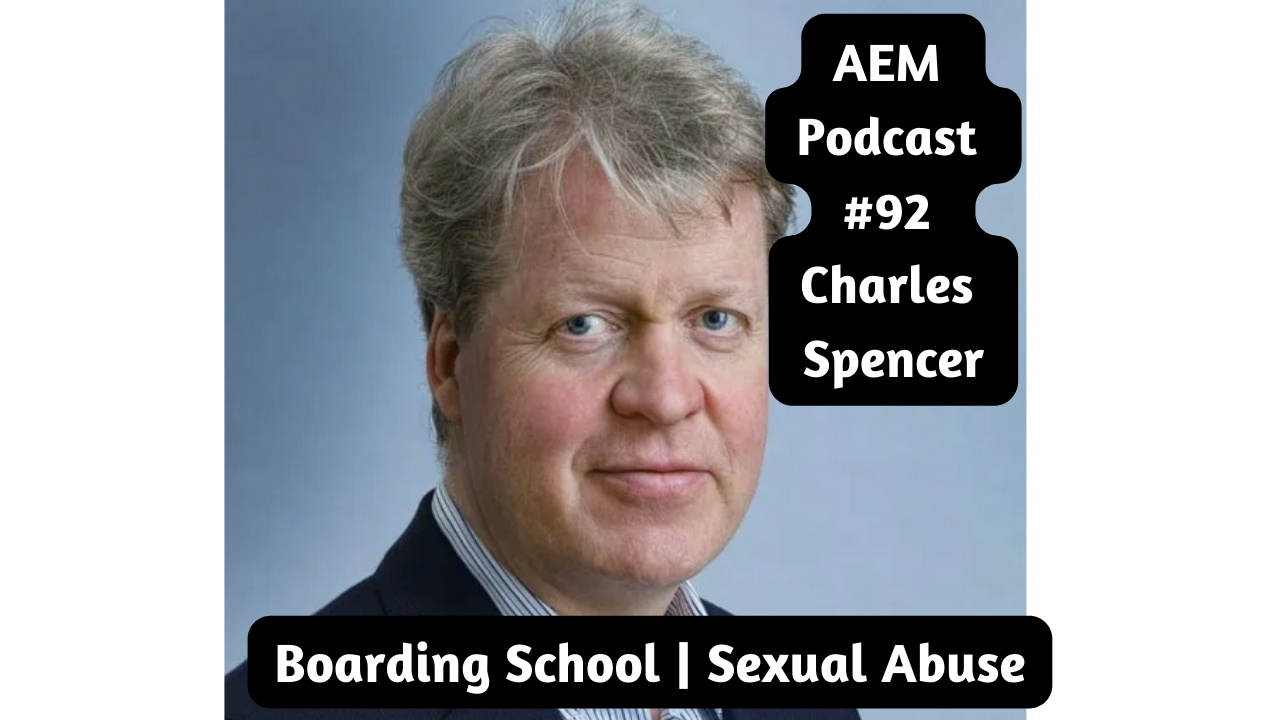
AEM Podcast #92 with Charles Spencer
Some conversations change the landscape simply by being spoken aloud.
In Episode #92 of An Evolving Man, I speak with Charles Spencer — author, broadcaster, and younger brother of Diana, Princess of Wales — about his memoir A Very Private School and the realities of elite British boarding schools that many would still rather not confront.
This is not an abstract discussion.
It is a testimony.
“Someone had to write this — and it had to be you”
Charles did not set out to write this book.
It emerged slowly — through decades of therapy, revisiting childhood memories, and, crucially, through encounters with former schoolmates who finally felt able to speak.
One man told Charles he had been raped three times at the age of nine.
Another spoke of a brother who died as a direct consequence of neglect and abuse.
When Charles hesitated, overwhelmed by the weight of what he was hearing, one man said something decisive:
"Someone has to write this. And it has to be you."
The illusion of protection
What comes through repeatedly is the gulf between what parents believed and what children lived.
At Maidwell Hall:
- parents were kept out
- charm and humour were used as a smokescreen
- disturbing behaviour was concealed behind witty school reports
- complaints from boys were dismissed as weakness or imagination
The Headmaster was, in Charles’s words, brilliant with parents — and monstrous with children.
This gap between adult perception and child reality is one of the most damaging aspects of institutional abuse.
“Fear” — or “Rage”
When Charles asked former classmates to sum the school up in one word, one said fear.
Charles chose rage.
Not adult rage — but the impotent rage of a child who knows something is deeply wrong but has no power, language, or protection.
That rage became a survival strategy.
Separation as amputation
Charles speaks movingly about early separations:
- losing his sister Diana when she was sent away at ten
- the loneliness that followed
- being too young to eat with adults at home
- evenings spent alone, even before he himself boarded
When he describes boarding school, one sentence stands out:
"What we suffered was not just separation — it was amputation."
Not merely leaving home, but being cut off from love itself.
Corporal punishment as ritualised cruelty
One of the most harrowing sections of the conversation concerns systematic corporal punishment.
At Maidwell:
- beatings were routine
- pain was ritualised
- humiliation was public
- punishment was arbitrary
Children were caned:
- for minor accidents
- for lateness
- for fear responses
- sometimes simply because another child was unavailable
Charles describes boys fainting, bleeding, wetting themselves in terror — and being punished again for those reactions.
This was not discipline.
It was sadism institutionalised.
Bullying as an extension of abuse
Bullying was not incidental — it was embedded.
Two notorious bullies terrorised younger boys with impunity, protected by the school hierarchy. Even criminal behaviour was quietly covered up rather than confronted.
As Charles notes, such environments reward cruelty and silence conscience.
Sexual abuse — and profound confusion
Charles speaks with great care about being sexually abused at eleven by a young assistant matron.
The complexity matters:
- she provided warmth in a loveless environment
- the abuse was disguised as care
- the emotional confusion was profound
He is clear: reversing the genders makes the abuse undeniable.
The damage was not just physical — it was psychological, emotional, and spiritual.
One detail is especially haunting: years later, while finishing the book, Charles accidentally discovered a childhood diary containing his abuser’s phone number — written in her hand.
Trauma does not vanish.
It waits.
Long-term consequences
Throughout the conversation, a consistent theme emerges:
Children adapt — but adaptation is not healing.
Men from the school carried:
- shame
- fear
- rage
- emotional shutdown
- lifelong anxiety
- difficulty with trust, intimacy, and self-worth
Some broke down decades later.
Some developed serious illness.
Many believed — wrongly — that something was fundamentally wrong with them.
“Children cannot consent to boarding”
Charles is unequivocal.
Children under 13 cannot meaningfully consent to boarding:
- they cannot grasp what they are losing
- they are seduced by fantasy (“Hogwarts”)
- they lack context
He argues — calmly but firmly — that one day society will look back on early boarding as we now view corporal punishment: unacceptable.
Institutions may have a place for specific needs — but sending children away to live with strangers should never be normalised.
Telling the truth is not bravery
One of the most important moments in the episode comes near the end.
Charles rejects the idea that speaking out is “brave”.
It’s not bravery. It’s telling the truth.
And he offers a gentle invitation to anyone listening who has carried their story in silence:
Unburdening yourself can change everything.
Why this conversation matters
This episode is not about the past alone.
It is about:
- how societies treat children
- how power protects itself
- how silence is enforced
- how trauma shapes leaders, families, and nations
If we want healthier adults and wiser decision-making, we must be willing to hear uncomfortable truths about how children have been treated — especially in institutions wrapped in prestige.
Listen to the full episode
AEM #92 — Boarding School Abuse, Fear & Silence
with Charles Spencer
Recommended reading
- A Very Private School — Charles Spencer
- Wounded Leaders — Nick Duffell
- The Body Keeps the Score — Bessel van der Kolk
Final reflection
If this conversation stirred something in you — anger, grief, recognition, or sadness — you are not alone.
Nothing was “wrong” with you.
You adapted to survive.
And survival can gently give way to healing.