
Porn Addiction, Shame and Mindfulness: A Conversation with Jeremy Lipkowitz
Porn Addiction, Shame and Mindfulness: A Conversation with Jeremy Lipkowitz
Porn addiction is one of those subjects many men struggle with but very few talk about openly.
It sits in the shadows.
It is common, but hidden.
Normalised, but shame-filled.
Available everywhere, but rarely discussed with honesty, maturity or compassion.
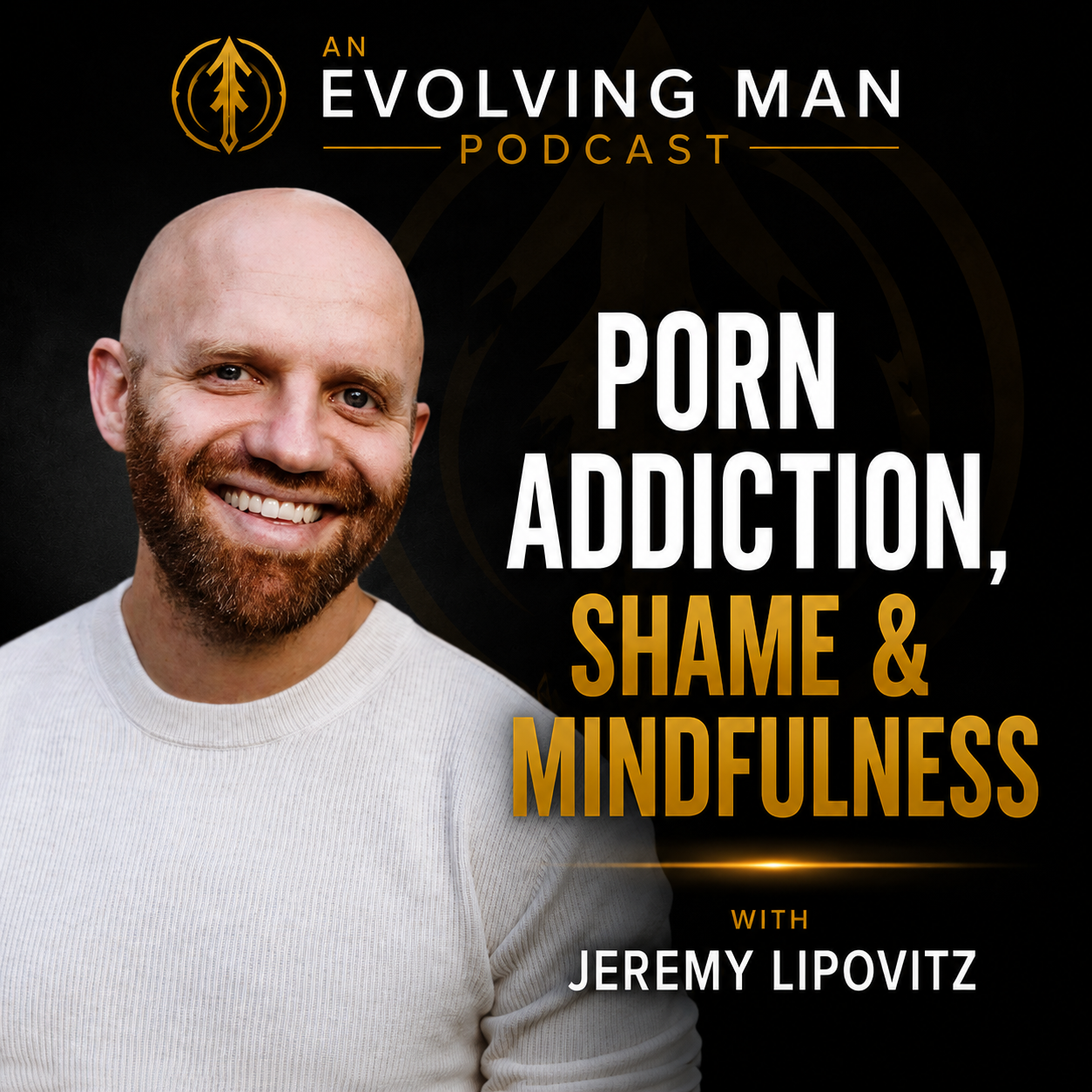
In this episode of An Evolving Man Podcast, I spoke with Jeremy Lipkowitz, executive coach, meditation teacher, leadership facilitator and founder of Unhooked Academy.
Jeremy works with high-achieving men who want to break free from porn addiction, compulsive habits, shame and destructive patterns.
His own journey began with addiction and depression in his early twenties, before Buddhism and meditation helped him completely change the direction of his life.
The Hidden Nature of Porn Addiction
One of the most striking parts of the conversation was the way Jeremy described the contradiction around porn.
On one hand, it is everywhere.
On the other hand, most men feel unable to talk about it.
This creates a dangerous combination.
The behaviour becomes normalised, but the inner experience remains deeply private.
A man may be outwardly successful, high-functioning and respected, while inwardly carrying shame, secrecy and a sense that he is living out of integrity.
This is one of the reasons porn addiction can become so difficult to shift.
It thrives in silence.
The Three A’s of Porn Addiction
Jeremy spoke about the three A’s that make porn so addictive:
- Affordability.
- Accessibility.
- Anonymity.
Porn is free or very cheap.
It is available instantly through a smartphone.
And it can be accessed privately, without ever having to speak to another person.
This combination makes it different from many other forms of addiction.
If someone struggling with cocaine addiction had to carry cocaine in their pocket all day, every day, recovery would become much harder.
For many men struggling with porn, that is essentially what the smartphone has become.
Craving and the Buddhist View of Suffering
Because both Jeremy and I have spent time in Buddhist practice, we explored addiction through the lens of craving.
In Buddhism, craving is seen as one of the roots of suffering.
The mind says:
If I can just have this, then I will be happy.
If I can just get this image, this experience, this feeling, this dopamine hit, then I will be satisfied.
But the satisfaction does not last.
The craving returns.
And the cycle continues.
Jeremy described how Buddhism helped him see that lusting after something he did not have was itself a form of suffering. It was not simply the behaviour that was painful. It was the mental state beneath it.
That insight changed his life.
Shame Keeps Men Stuck
A major theme in the conversation was shame.
Shame is one of the most powerful forces keeping addiction alive.
A man acts out.
He feels ashamed.
He hides.
The shame becomes unbearable.
So he acts out again to escape the shame.
This becomes a loop.
What breaks the loop is not more self-hatred.
It is awareness, ownership, compassion and community.
Jeremy spoke about the importance of men’s groups and safe spaces where men can speak honestly without being judged or shamed.
Often the first healing moment is realising:
I am not the only one.
Mindfulness and the Space Between Stimulus and Response
One of the most practical parts of the conversation was around mindfulness.
Mindfulness is not about becoming spiritual or adopting a new identity.
It is about developing awareness.
Awareness of the body.
Awareness of emotions.
Awareness of thoughts.
Awareness of urges.
Awareness of the moment before we reach for the phone, open the website, pour the drink, send the message or act out.
There is a space between stimulus and response.
Much of recovery happens in that space.
The more we can become aware of what is happening inside us, the more choice we have.
The Attention Economy
We also explored the attention economy.
Our phones, social media platforms, apps and digital systems are designed to capture and hold attention.
This matters because addiction is not happening in a vacuum.
We live in a world designed to distract us, stimulate us and keep us hooked.
Porn is part of that wider ecosystem.
So recovery is not only about stopping a behaviour.
It is also about reclaiming the mind.
Reclaiming attention.
Reclaiming presence.
Reclaiming agency.
A Compassionate Path Forward
This conversation is not about shaming men.
Shame is already part of the problem.
This is about bringing awareness, honesty and compassion to an issue that affects many men and many relationships.
It is about learning to understand the deeper emotional drivers beneath addictive behaviour.
Loneliness.
Fear.
Boredom.
Stress.
Lack of purpose.
Disconnection.
When we understand what we are really trying to escape, we can begin to heal at the root.
And that is where freedom begins.
Final Reflection
Porn addiction recovery is not simply about willpower.
It is about awareness.
It is about community.
It is about learning to feel.
It is about understanding the mind.
It is about bringing what has been hidden in shame into the light of compassion and responsibility.
That is the path Jeremy Lipkowitz is helping men walk.
And it is a conversation I feel we need to keep having.